
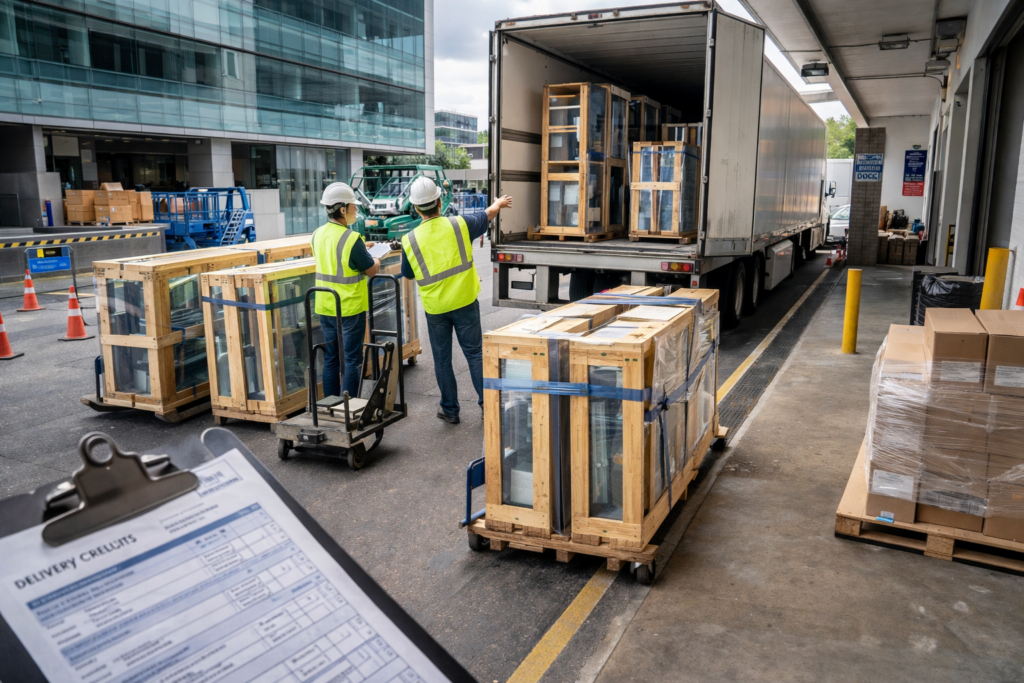
Architectural wall system logistics don’t behave the way they used to in the post-COVID environment. Even when products are ordered correctly and schedules are built responsibly, deliveries arrive later, come in fragments, or show up with less communication than anyone wants.
This isn’t about nostalgia for “the old days.” It’s about acknowledging a real, post-COVID shift in how wall system components move from manufacturer to jobsite—and how that shift increases risk for dealers, installers, and end clients.
The Biggest Change: Predictability Dropped
For furniture dealers, architectural wall system logistics is now a core execution issue rather than a background coordination task. Before COVID, the biggest logistics challenge was usually timing. You could plan around lead times and freight windows with reasonable confidence. Now, the more common problem is unpredictability.
A shipment may be “on the way,” but that doesn’t always mean:
- it will arrive in the expected window,
- it will arrive as one complete delivery,
- or that the carrier will communicate clearly when something changes.
For installation teams, unpredictability is more disruptive than delay. Delays are frustrating, but at least they can be planned for. Unpredictability creates last-minute scrambling and increases the odds of jobsite conflict.
Fragmented Deliveries Are More Common
One of the most visible post-COVID changes is the rise of partial and fragmented deliveries. Architectural wall systems are component-heavy by nature—frames, panels, glazing, doors, hardware, trims, gaskets, and specialty parts. When those arrive in separate waves, installation becomes harder to sequence.
Fragmented deliveries often create a familiar pattern:
- Crews arrive ready to start.
- A key subset of components is missing.
- Work begins in limited areas, then stops.
- Re-mobilization is required when the missing pieces arrive.
- The schedule gets squeezed and the job becomes a rush at the end.
This is where “logistics” turns into real money. Re-mobilization, idle time, repeat trips, and compressed finish work can quickly cost more than people expect.
Communication Isn’t Just “Nice to Have” Anymore
Another post-COVID shift is communication quality. Many teams have experienced carriers or delivery coordinators who:
- provide vague ETAs,
- go dark during changes,
- or confirm windows that later collapse without notice.
In wall system projects, communication isn’t a luxury. It’s a dependency. Install crews, site access, freight elevators, loading docks, security requirements, and trade sequencing all hinge on reliable delivery coordination. When communication fails, the dealer and the installer often absorb the stress—even if neither caused the issue.
Jobsites Became Less Flexible
Many commercial sites are less tolerant of disruption than they were in the past. Occupied spaces, security protocols, and strict building rules mean deliveries can’t simply “show up whenever.” Missed windows can lead to:
- denied access,
- storage problems,
- rescheduling of elevators or docks,
- and conflicts with other trades.
In other words, the jobsite itself may now be a tighter bottleneck than the manufacturing lead time.
How Install Teams Adapt in the Post-COVID World
The projects that run smoothly today tend to treat logistics as a core part of execution planning, not an afterthought. That usually means a few practical habits:
1) Pre-install component verification
Before mobilization, confirm not just that something “shipped,” but what shipped:
- Are all major components included?
- Are doors and hardware in the same wave?
- Is glazing scheduled and confirmed?
- Are critical specialty items accounted for?
2) Plan for phased starts (with clear boundaries)
If deliveries are likely to be staggered, define what a “productive start” looks like. Starting without critical components can create a false sense of progress followed by an expensive stall.
3) Build margin around logistics, not just labor
Schedules often account for install labor but assume logistics will behave. Post-COVID, the margin belongs around deliveries and handoffs.
4) Tighten communication loops
A simple, consistent cadence—dealer + installer + site contact—reduces surprises. When updates are frequent and structured, small problems stay small.
What This Means for Dealers
For furniture dealers coordinating architectural wall projects, the post-COVID logistics environment shifts the role slightly. It’s no longer enough to track lead times and ship dates. The real question becomes:
Will all components be on site, in the right order, in time for a productive install sequence?
That’s not a small nuance. It’s the difference between a clean installation and a job that becomes a series of restarts.
Final Thoughts
Architectural wall systems have become more precise and more integrated. At the same time, post-COVID logistics have become less predictable and more fragmented. That combination increases risk—especially at the end of the project, when schedules are tight and tolerance for disruption is low.
The best outcomes come from teams that treat logistics as part of execution planning. Not because anyone enjoys paperwork or checklists, but because in the current environment, the cleanest installs are built on the cleanest deliveries.